Japanese–English Websites
Give people in Japan and overseas a website that feels written for them—not simply a page translated from somewhere else.
Discuss your projectCreate a useful entry point for each audience, not just a second language version.
Japanese and English audiences can need different information, context, and proof before they are ready to make contact. Clickmark designs Japanese–English websites for Japanese businesses communicating internationally and for overseas businesses building a presence in Japan. We consider more than words: content priorities, navigation, forms, language switching, editorial workflow, and the signals that help search engines understand each version. The result is a practical site that can be used and maintained across both sides of the project.
Do not let important context get lost between Japanese and English.
Directly translating a Japanese site can leave an overseas reader without the context or proof they need; translating an English global site can leave a Japanese visitor without the practical information they expect. We establish who each audience is, what they need to understand, and what should remain consistent or be adapted in each language.
Project communication and review can be managed in both Japanese and English. That helps an overseas head office, a Japan-based team, and the production team make decisions with the same purpose in mind—and creates an editing workflow that remains workable after launch.
Plan an entry point for each audience
Customers, partners, and candidates overseas may need a different introduction from Japanese visitors. We decide what should lead each language version and why.
Make bilingual production practical
Existing material, specialist terminology, brand language, and approval routes are organised so copy, translation, editing, and design decisions can move forward clearly.
Keep language operations clear after launch
Language switching, paired pages, URLs, metadata, and editorial responsibilities are set up so future updates and new languages remain manageable.
Three situations in which a Japanese–English website matters.
Multilingual work is not simply adding pages. It starts with the business situation: what people need to confirm in each language, who can check the facts, and how the information will be kept current after launch.
Overseas organisations entering or operating in Japan
For organisations that need to give a first-time visitor in Japan the practical information and confidence that a global site alone may not provide.
Services available in Japan, local contact routes, service area and process, access, what happens after an enquiry, and evidence of the people or setup behind the work.
Who between the overseas head office and Japan-based team confirms local facts, wording and updates—and what should remain shared.
We begin by comparing the current global site with the explanations a person in Japan actually needs.
Japanese organisations communicating internationally
For organisations that need overseas customers, partners or candidates to understand their context, strengths, evidence and next step in clear English.
The context a first-time visitor needs, the role of the service or product, specialist terminology, examples, and the appropriate route to contact, recruitment or another action.
Brand language, facts requiring subject-matter review, pages that should correspond across languages, and who will review future English updates.
We use sales material and the current website to identify what an overseas reader needs to understand first.
Schools, organisations and regions communicating across languages
For information that people may be researching from another country or in another language before they decide to visit, apply, participate, enquire or partner.
Programme or activity detail, timing, access, FAQs, application or enquiry routes, and current news that needs to stay accurate.
Who confirms accuracy, which information needs regular updates, what remains aligned or is expanded per language, and how enquiries are handled.
We map the route from first discovery to comparison and an informed conversation around the way people actually look for information.
Work that makes an international education journey clearer online.
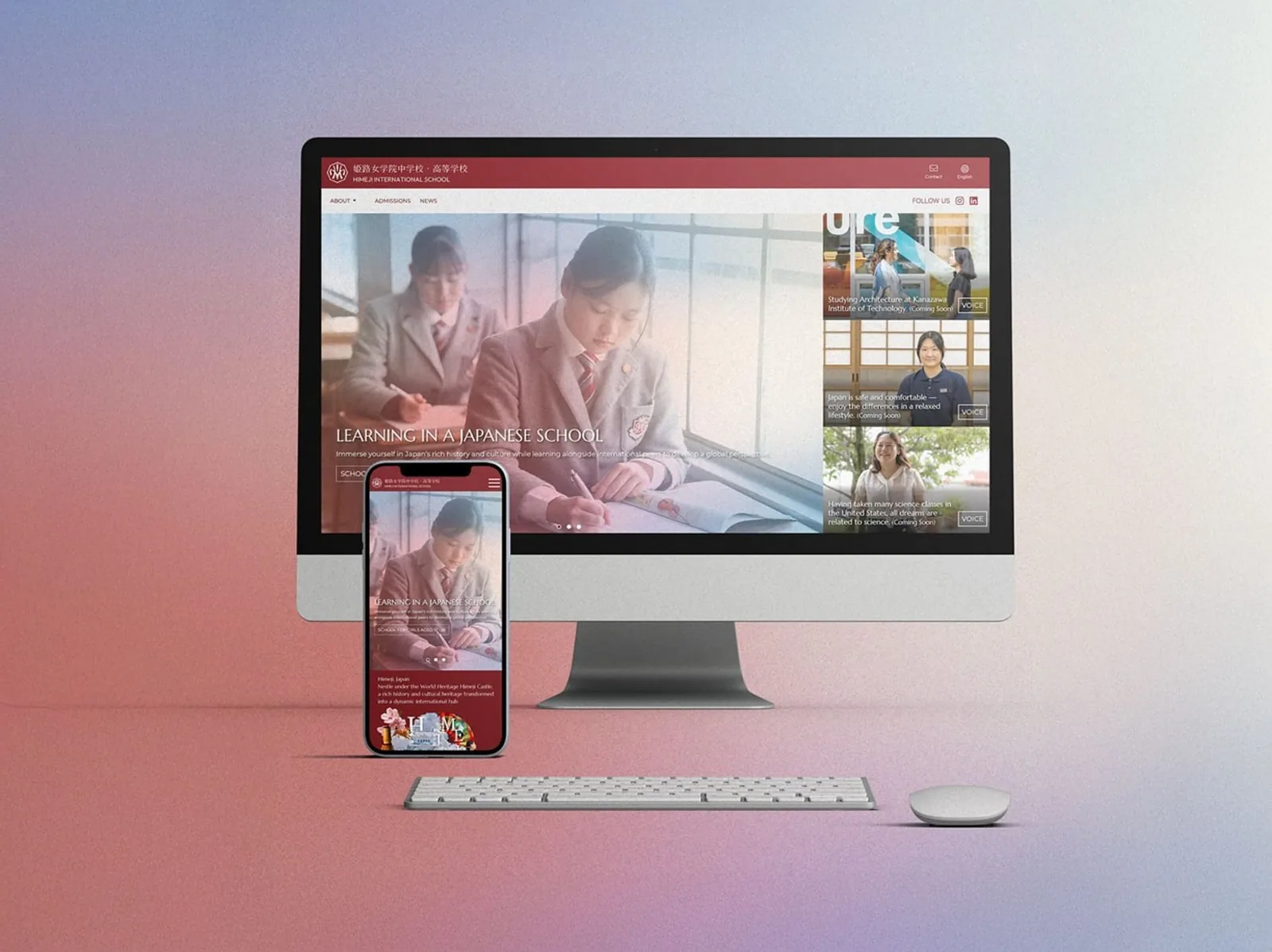 Himeji International School — International Student WebsiteAn international-facing school website that helps prospective students and families understand learning, life and admissions at Himeji International School in Japan.
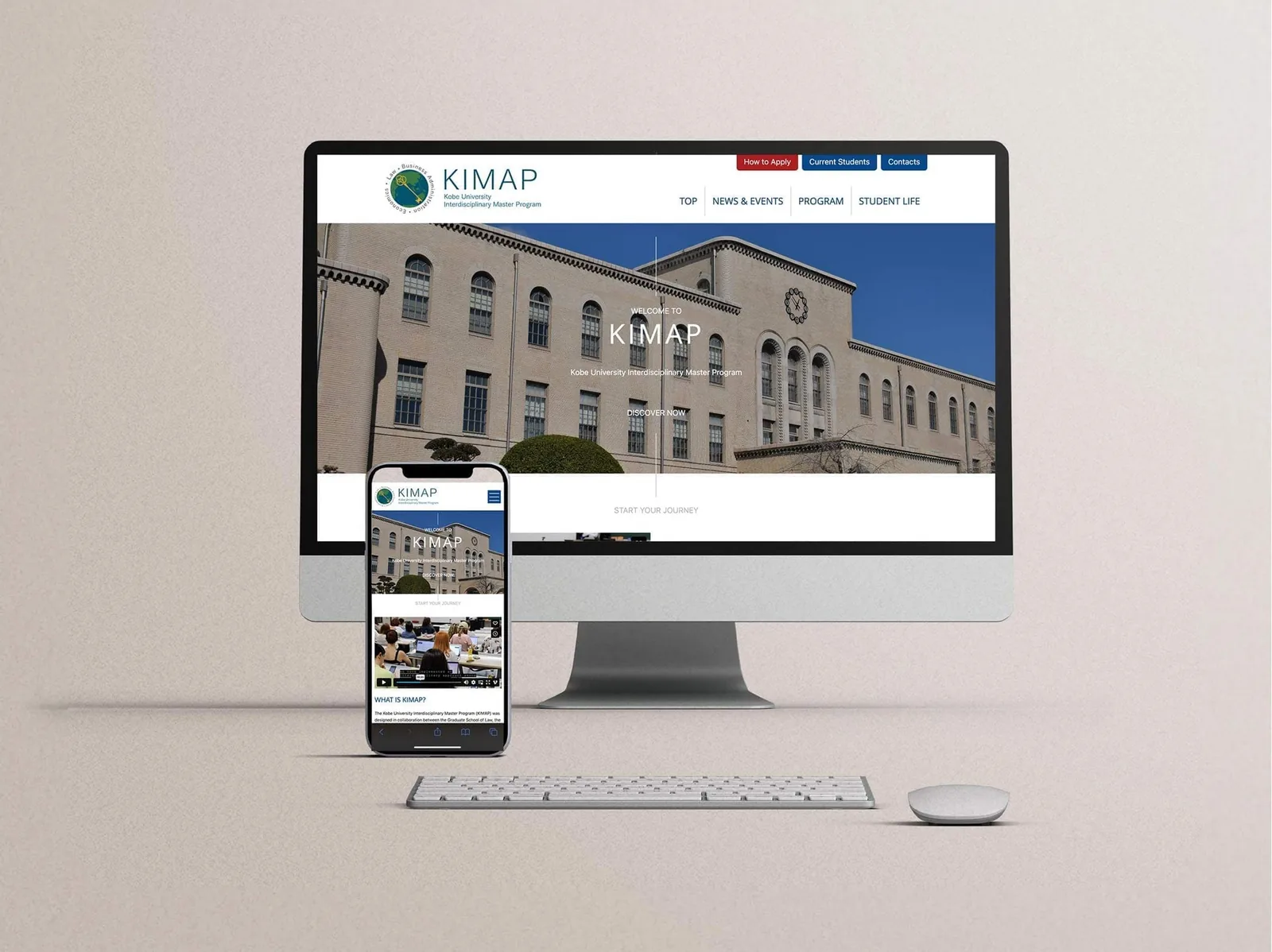 Kobe University KIMAP — Interdisciplinary Master’s Program WebsiteA clear, international-facing website for Kobe University’s English-language interdisciplinary master’s program across Law, Economics and Business Administration.
Agree the decisions for each language before translation begins.
A Japanese–English website needs more than the same text in two languages. Before words are translated, we establish what each audience needs to know, which pages should correspond or differ, who can confirm accuracy, and how editing will work after launch.
-
Gather source material and terminology
We organise existing Japanese and English material, service explanations, FAQs, specialist terms, brand language, photography and the people responsible for review.
-
Set the audience and page purpose in each language
We separate facts that should remain aligned from context that should be added or expressed differently, then establish the role and information order for each page.
-
Translate, edit and verify facts
As language is refined, specialist facts and conditions are checked with the people or appropriate translators/editors best placed to confirm them. An automatically generated draft alone is not a publication decision.
-
Create paired-page and update rules
Language switching, corresponding pages, CMS editing and approval flow are made clear so new information does not quietly become outdated in one language.
When this service is useful
- Explain your business clearly to overseas customers, partners, and candidates
- Give a Japanese audience the information an English-only global website does not provide
- Coordinate Japanese and English copy, review, and updates between internal and external stakeholders
- Make language switching and language-specific pages clear for both visitors and search engines
What we can deliver
- Site structure and content priorities designed around each Japanese and English audience
- Organisation of existing material plus a practical approach to bilingual copy, translation, and editing
- Language-specific URLs, navigation, forms, and an editable CMS/WPML content setup
- Multilingual SEO foundations including hreflang, titles, descriptions, and corresponding-page relationships
- Operational guidance and technical support for new pages, future languages, and ongoing updates
A process that keeps decisions clear.
-
01
Listen & clarify
We confirm the goal, the people you need to reach, and the practical conditions around the project.
-
02
Design & build
We shape the content, design, and required functions into an experience that feels considered and useful.
-
03
Launch & improve
After launch, we can support measurement, updates, and the next improvements as your business evolves.
Start with the audiences and language decisions already in view.
A Japanese–English website does not need a complete translation plan before the first conversation. We can begin with the audiences, current material and people who need to review the facts in each language.
-
The audiences and languages that matter
Tell us who needs information in Japanese and English, what each group is deciding and where the current explanation falls short.
-
Existing sites, pages and source material
A current Japanese or English site, sales material, terminology, FAQs and examples help identify what can correspond and what needs different context.
-
Facts, terms and people responsible for review
It is useful to know who can confirm organisation-specific information, specialist terminology and future updates in each language.
-
Publishing and operational conditions
CMS ownership, page relationships, language switching, internal contributors and approval routes can be discussed as far as they are known.
-
Timing and investment context, if known
A target date or investment context helps us plan responsibly, but it does not need to be final before an initial conversation.
A partial outline is enough to begin. Please do not send passwords or confidential access details through the enquiry form; we can clarify the language, content and ownership decisions together.
Questions to clarify the next step.
Can Clickmark help with translation as well as the website?
We can organise the existing Japanese or English material and support the production process around translation and editing. For highly specialised content, we can also agree a review process with the people or translators best placed to confirm accuracy.
Should the Japanese and English pages contain exactly the same content?
Core information should correspond, but the most useful order of explanation, proof, FAQs, and enquiry route can differ by audience. We identify what needs to stay aligned and what should be adapted for each language.
What is involved in multilingual SEO?
We establish language-specific URLs, reliable switching, hreflang, titles and descriptions, and clear relationships between corresponding pages. This does not guarantee rankings, but it gives visitors and search engines a sound basis for reaching the appropriate language version.
Selected work for this service