

Your next website partner can be in Japan. Your business can be anywhere.
Clickmark welcomes companies around the world. From our base in Japan, we have built websites for businesses in different countries and developed continuing relationships with teams overseas. Whether you are a Japanese company operating abroad, an international business working with Japan, or a team looking for a thoughtful design and development partner, we would love to hear what you are building.
We work together online and can discuss visiting your team when an in-person meeting would help. Location, timing and travel arrangements are agreed for each project.
A useful website begins with understanding both the business and the people it needs to reach.
Working internationally brings different expectations, decision-makers and points of reference into the same project. We help make those differences clear early, so the website reflects what the business actually offers and what its audience needs to know.
Japanese companies and teams operating overseas
Your local website may need to explain a Japanese company’s strengths while making its overseas operation easy to understand. We can help organise the relationship between head office and the local team, the services available in that market, and the Japanese and English information each audience needs.
International businesses connecting with Japan
A global website does not always answer a visitor’s practical questions about Japan. We can clarify the local offer, company context, supporting evidence and route to enquiry, while keeping the Japanese and English pages consistent with the wider brand.
Companies looking for a lasting website relationship
You do not need a Japan-related project to work with us. We welcome conversations about new websites, redesigns, content and ongoing improvements, starting with your audience, the current challenge and what a useful working relationship would look like.
Make the decisions clear, keep the right people involved, and give the work room to progress.
Online meetings, shared materials and written decisions can keep a project moving across locations. We agree how to communicate at the beginning, including suitable meeting times, who reviews the work and which decisions need input from more than one office.
-
01
Start with your business and audience
Tell us where your team and customers are based, what the website needs to achieve, and what is working or difficult today. An existing website, a short outline or a few examples are enough to begin the discussion.
-
02
Agree the scope and the way we will work together
We identify the people responsible for decisions, the languages and markets in scope, the review process and the launch priorities. Meeting times, any useful visits and the commercial arrangements are discussed alongside the work itself.
-
03
Build for the people on each side of the screen
Content, design, mobile usability and the editing setup are developed together. For Japanese–English sites, we plan what should stay aligned and where readers need different explanations, with factual and specialist wording reviewed by the appropriate people.
-
04
Prepare for launch and the next stage
We agree responsibilities for content approval, website access, forms and launch checks, then establish who will keep the site current. Ongoing support and future improvements can be planned around your team’s needs and the agreed scope.
Different audiences, the same need for clear and useful information.
These published projects show our work on global manufacturing communication, English-language property search in Japan and information for international students. Each starts with the questions a reader needs answered before making a decision.

Momoi Fishing Net — English Website Translation and Localisation
English website translation and localisation for Momoi Fishing Net, helping a long-established global manufacturer communicate its technology, network and sustainability efforts clearly across markets.
Read the case study
Core8Eight — English-Language Luxury Real Estate Website and Property Search
An English-language real estate website and advanced property-search experience for Core8Eight, serving international buyers, renters and investors looking across Kobe, Hyogo and beyond.
Read the case study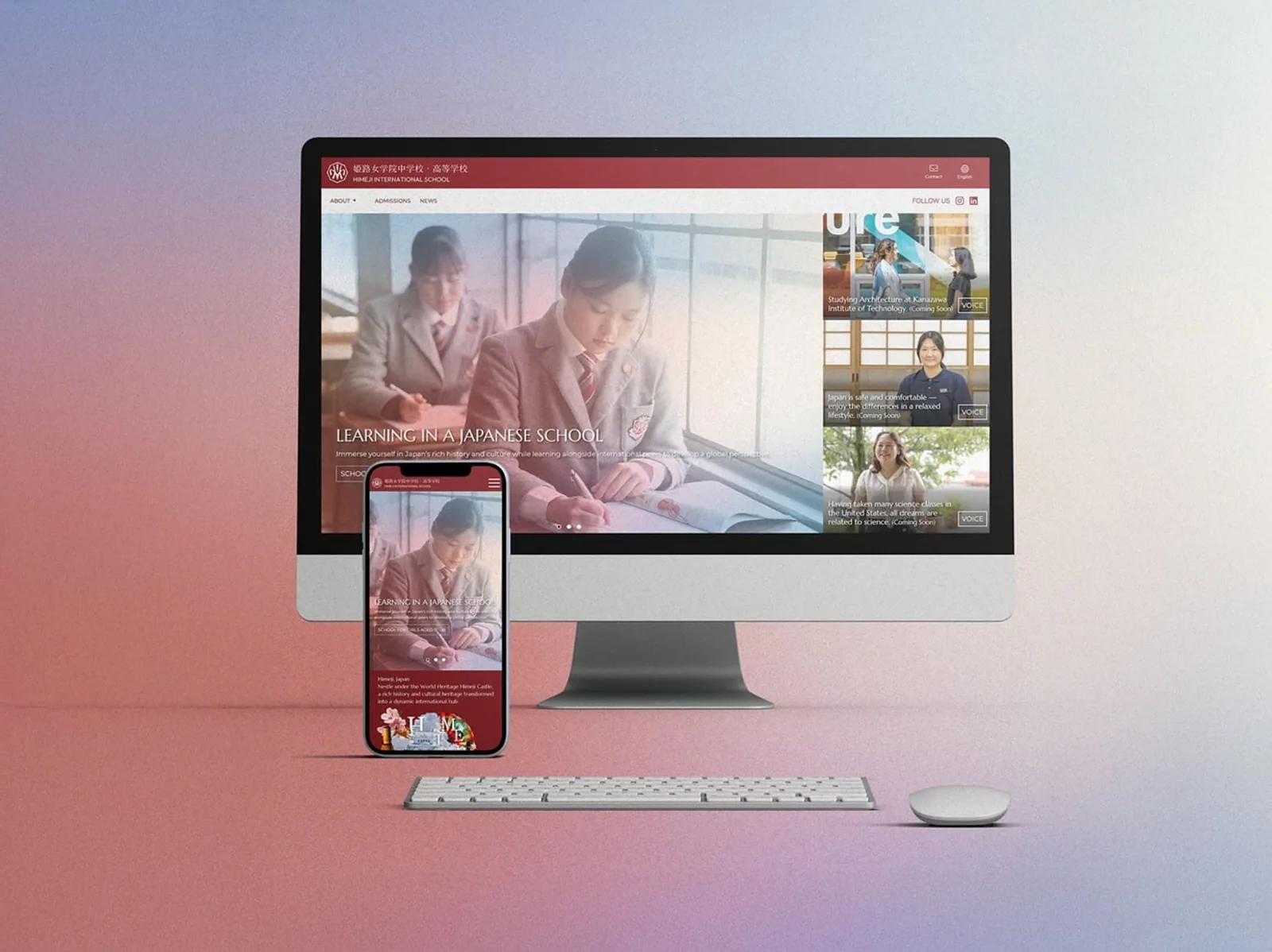
Himeji International School — International Student Website
An international-facing school website that helps prospective students and families understand learning, life and admissions at Himeji International School in Japan.
Read the case studyBring the right mix of design, content and practical technology to your project.
We can help with a new website, an existing site that needs a clearer direction, Japanese–English communication, technical foundations and ongoing improvement. We begin with what your business needs and agree the scope together.
Questions before getting started
Can we work with Clickmark if our company is outside Japan?
Yes. We welcome companies worldwide and already work with businesses overseas. Tell us where you are based, who the website needs to reach and what you would like to improve. We can begin with an online conversation.
Can you help a Japanese company’s overseas office or subsidiary?
Yes. We can help organise the website around both the local audience and the relationship with the Japanese head office. We clarify local services, brand guidance, source information and who will approve each language, so responsibilities are clear from the start.
How do meetings work across time zones?
We agree suitable meeting times with your team and use shared materials and written feedback between conversations. Tell us the locations and availability of the people involved so we can propose a workable review process.
Could you visit our team overseas?
We are open to discussing a visit when it would be useful for the project. The purpose, location, timing and travel costs need to be agreed in advance. An initial conversation can take place online.
Does an international website have to contain identical Japanese and English pages?
Core facts should remain consistent, but readers may need different context, examples or routes to contact. We plan those differences deliberately and agree who reviews the information. Requirements for additional languages or specialist local content are discussed individually.
What should we include in our first enquiry?
Your company and website, the countries or audiences involved, the current challenge and any timing you have in mind are helpful. Let us know who will take part in decisions and whether you need Japanese, English or both. A complete specification is not required.