AI Can Build a Website. But Can It Build One Your Business Can Rely On?
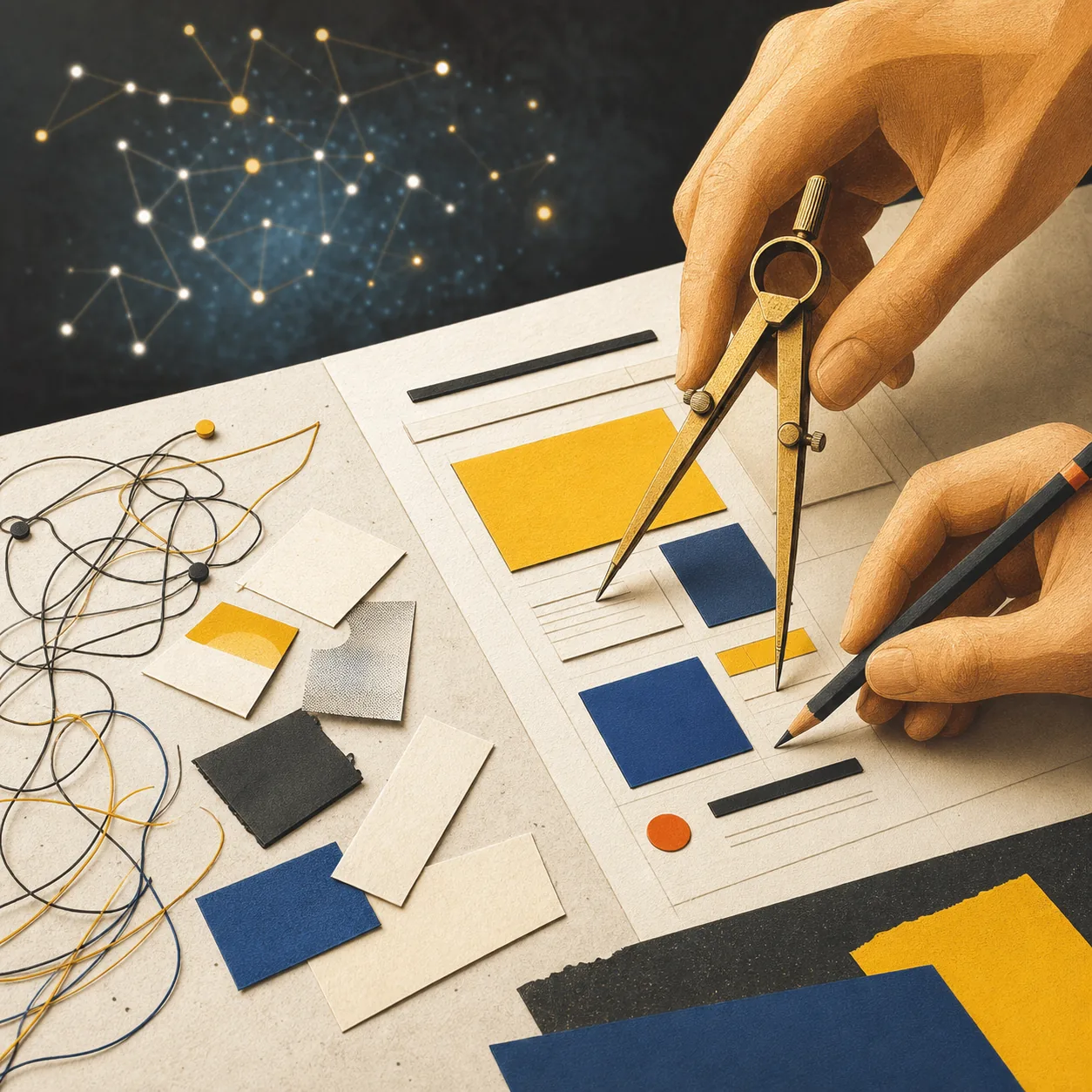
At business events, we increasingly hear: “I am going to build our website with AI” or “I can ask for any change whenever I need it.” It is natural for someone without a background in marketing, design, or programming to feel that a premium AI tool will let them move faster than working through an agency. AI has made the first step from an idea to something visible remarkably light. But a website appearing on a screen is not the same as a website that earns trust from a first-time visitor, can be found through search, supports everyday business, and remains safe and useful over time.
AI is a powerful tool. It does not replace purpose, judgement, or accountability.
AI can quickly draft copy, page ideas, portions of code, visual directions, and improvement suggestions. There is no reason to deny that value. At Clickmark, we use it to strengthen experience and make research, production, and checking better. The decision to use an output, what to change, what to say to whom and in what order, and what must be protected after launch still belongs to people who understand the business and its users.
- AI makes it easier than before to start building
- A finished-looking page is not automatically clear, discoverable, or maintainable
- The quality of the input and the ability to judge the output shape the result
- Technical operation and responsibility extend well beyond a prompt
- An experienced team can use AI to improve both speed and quality
What we look for in an AI-built website
Not every website made with AI is poor. For a small experiment, a personal presence, or an early test of an idea, making something yourself quickly can be exactly right. Yet when we later review websites built this way, the surface can look complete while important business issues remain unresolved underneath.
- The message is unclear: services, reasons to choose the business, proof, pricing context, and the route to contact are not arranged in the order a first-time visitor needs to make a decision.
- The design has no consistent system: colours, spacing, headings, imagery, and buttons may each look plausible, without creating a brand experience people remember.
- The content remains generic: there may be polished-sounding copy, but no knowledge, examples, point of view, or answers that only this business can provide.
- Search and sharing basics are weak: page purpose, titles, descriptions, internal links, image information, and important URL decisions have not been considered together.
- Performance and usability are untested: heavy images, unnecessary processing, difficult text, unclear forms, and small-screen interactions can remain unnoticed.
- Operation and handover are undefined: it is unclear who updates the site, holds the accounts, or responds when something stops working.
These issues do not happen because AI is incapable. They happen when nobody has defined who is responsible for the business context, design decisions, technical checks, and care for the people using the site before and after the output is generated. AI does not automatically turn a vague question into a business strategy.
Fast changes are not the same as good decisions
There is genuine value in getting a proposed change quickly. If someone has experienced slow agency communication, poor interpretation of their request, or nowhere to turn after launch, that promise is understandably compelling. It is an important challenge for agencies too: use AI to reduce avoidable waiting and back-and-forth, while remaining available for useful conversation and careful checking.
But a fast output is not evidence of a good one. When we later review AI-built websites and systems, we can find a surface that looks orderly while the underlying work is thin: uninspired design, heavy pages, weak search foundations, robotic content, a difficult editing structure, or unclear ownership and maintenance. A business owner may understand the context behind what they see. A first-time customer, a search engine, and the next person asked to update the site do not share that context.
That is why a standard for distinguishing good from poor work matters. A vague purpose or generic instruction can produce an output that sounds convincing but lacks focus. Without the experience to identify issues in the strategy, writing, design, or technical work, a business can spend months or years building on a foundation it eventually needs to replace.
Between a prototype and a tool a business can rely on
The post below is one practitioner’s observation about small-business owners feeling able to build internal tools with AI. It does not mean that software engineering as a whole has disappeared. AI has lowered the cost of trying an idea and automating a contained task; that is a meaningful change.
A tool people depend on still brings purpose, exception handling, data and permissions, explanation for users, testing, maintenance after change, and accountability when something goes wrong. AI can accelerate the early drafts and iterations. The practical question is where a prototype can safely stop and where design, review, and ongoing operation need to begin.
A website or web system is more than a set of prompts
Beyond the pages people see, a dependable website involves many decisions and responsibilities. Not every one is a large task on every project, but knowing which ones exist and who owns them creates the foundation for a site that does not become a problem later.
Purpose, audience, and user journey
An enquiry, purchase, booking, application, or route for existing customers each calls for a different order of information and pages. The clearer this is, the more useful AI instructions become too.
Brand and content
Brand is more than a logo or a palette. The words, photography, case studies, promises, FAQs, and page priorities need to help a first-time visitor decide that this is a business worth speaking with.
Technical foundation and launch responsibility
Hosting, domain, DNS, email, CMS, backups, permissions, security, forms, external services, and data handling rarely appear in a visual mock-up. They are nevertheless the operational backbone of a website.
Quality assurance and accessibility
Display on phones and desktops, keyboard use, text and contrast, image alternatives, links, forms, and error handling all need considered checks based on the people and environments involved.
SEO, measurement, and improvement
Useful websites help search engines understand the right things, then use site activity and enquiry patterns to improve information and journeys. Launch is the point at which learning from real use begins.
Maintenance, support, and the next decision
Updates, plugins, backups, issues, new content, new functions, and eventual renewal all need a sensible route. Routine support and larger planned work should be distinguishable.
People who know their business deeply can naturally leave out what feels obvious to them. A first-time visitor does not share that context. External perspective and specialist experience help translate a business’s value into the information and decision order a visitor needs.
AI is closer to a new bicycle for experienced people
A bicycle helps someone travel farther and faster than walking. It does not decide where to go, how to read the traffic, or which route is safe. AI is similar. For someone with experience, it can reduce repetitive effort, produce more options to compare, and accelerate research and implementation.
For Clickmark, AI is not a replacement for experience. It is a way to apply the judgement developed through years of production and development more quickly and reliably. It can feel like having many capable junior assistants preparing first drafts and research; an experienced person still decides what to delegate, which output to accept, and what needs verification. With a good question, clear criteria, review, and testing, AI helps shape a result around a real business more quickly and reliably.
When DIY makes sense—and when specialist partnership matters more
Not every website requires a large production effort. A small idea test, event notice, personal portfolio, or early landing page can be a good reason to begin with AI or a no-code tool. There are situations where publishing quickly and learning is the most valuable thing to do.
For a company website, a sales or recruitment route, a CMS updated by several people, ecommerce or booking, forms handling personal information, a redesign that must protect established search entry points, Japanese–English communication, or a web system connected to operations, later corrections can become expensive in time and attention. If the site is intended to serve the business for months or years, it is worth creating a foundation that can be improved rather than thrown away.
Clickmark builds for dependable use, not speed alone
Some businesses have experienced slow agency communication, unclear interpretation of their request, or nowhere to turn after launch. That concern is valid. Clickmark starts by clarifying purpose and priorities even when the specification is incomplete, making the decisions visible, and separating day-to-day changes from larger planned work.
Across many years and hundreds of websites and web systems planned, produced, launched, and kept live, we have learned to treat web design, content, CMS platforms such as WordPress, custom development, SEO and measurement, technical foundations, and support as parts of one business system. We actively use AI within that work. What matters is not that AI was used; it is the improvement it leaves for your customers and your team.
Talk to us about a new site through Website Design & Development, an existing site through Website Redesign, visibility and measurement through SEO, Analytics & Local Visibility, operational tools through Custom Web Systems, technical responsibility through Website Technical Foundations, or ongoing work through Website Support & Maintenance.
Frequently asked questions
If we use AI, do we still need a website agency?
It depends on the situation. There are small projects for which self-service AI tools are appropriate. Where brand, customer decisions, search, technical foundations, operation, and responsibility matter, the ability to guide and verify AI output around the real business remains valuable.
Can Clickmark review or take over an existing AI-built website?
Yes. We can start by reviewing the site’s purpose, content, access, hosting, forms, editing workflow, measurement, and technical condition, then separate focused improvements from work that should be planned as a larger project.
Does Clickmark avoid using AI?
No. We use AI for research, drafts, comparison, implementation support, and quality checking where it is helpful. We do not delegate fact checking, design judgement, care for users, technical review, or responsibility for a launch to an AI tool.
AI WITH EXPERIENCE
Use AI to create a website that genuinely helps your business.
Whether you want to improve an existing AI-built site, create a new site with speed and care, or have a partner for what comes after launch, we can start with the situation you have today.